Javagal Srinath offers verdict on Sourav Ganguly’s delay tactics against Steve Waugh

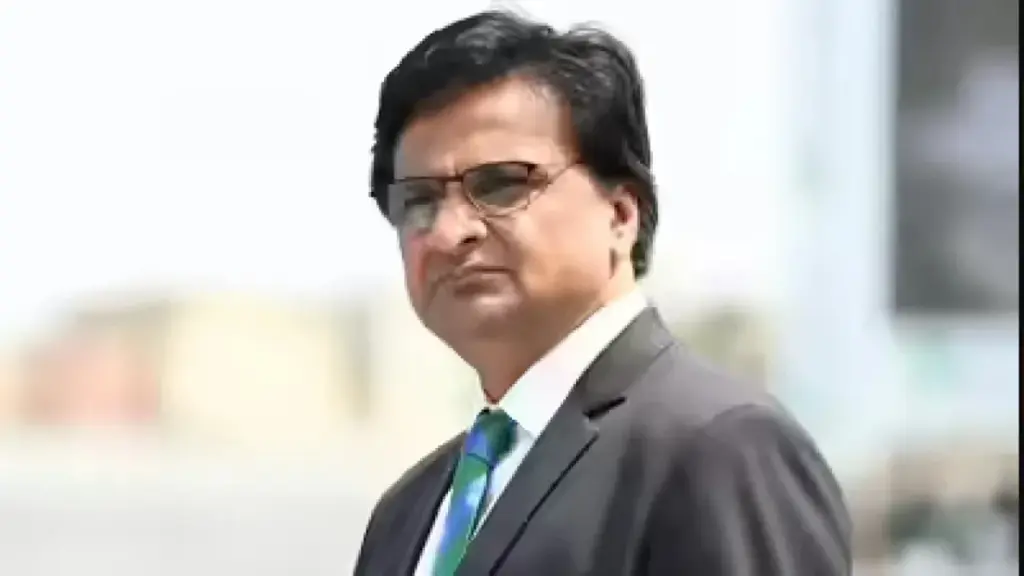
Javagal Srinath, a former India fast bowler and current ICC match referee, has commented on the well-known incident involving Sourav Ganguly making Steve Waugh wait for the toss during the 2001 Test series against Australia. Srinath suggested that if the incident had occurred under his supervision as a match referee, Ganguly could have faced disciplinary action.
Speaking at an event in Chennai, Srinath stated, “I would have banned Sourav for a few games!” The incident, which has been described as an act of gamesmanship, reportedly irritated Waugh and the Australian team during the series. Ganguly later attributed the delay to being unable to find his blazer, a claim Srinath implied was debatable.
The 2001 Test Series Context
The 2001 Test series against Australia is a significant chapter in Indian cricket history. It is remembered for India’s comeback in Kolkata and the performances of Harbhajan Singh. The series also highlighted Ganguly’s leadership. Australia, who were strong favourites entering the series, secured a convincing victory in the first Test in Mumbai.
However, the series took a dramatic turn in the second match at Eden Gardens. India achieved a remarkable comeback after being asked to follow on. VVS Laxman and Rahul Dravid formed a substantial partnership that shifted the momentum of the match, and Harbhajan Singh’s bowling contributed to India’s turnaround. India became only the third team at that time to win a Test after following on, ultimately securing the series 2-1.
Srinath was part of the Indian squad for the opening Test of the series but played while carrying an injury, which led him to miss the rest of the contest.
Srinath’s Perspective on Indian Cricket’s Transformation
Beyond the specific incident, Srinath also reflected on the broader transformation of Indian cricket during that period. He noted that Indian cricket was in the process of rebuilding its reputation following a match-fixing scandal that had impacted the sport in the late 1990s. Srinath recalled that “a lot of things came good to us” after the scandal.
He emphasised the determination among players to restore faith in Indian cricket and demonstrate the sport’s integrity. Srinath observed, “There was a bit of a resoluteness in every player to really put that image back and prove to the world that cricket was clean.” He added that individual players showed leadership, which contributed to the team’s success both in India and abroad.
Srinath praised Ganguly’s leadership, particularly his role in nurturing young talents such as Yuvraj Singh, Harbhajan Singh, and Virender Sehwag. He noted that leadership stemmed from the top four or five players being aligned, which helped India achieve consistent victories at home and improve their performance overseas. Srinath recalled that India had struggled to win abroad between 1991 and 1997-98, but this began to change from 1999 onwards.
Srinath’s career after playing has kept him involved in international cricket, having overseen more than 500 matches as an ICC match referee.
During a discussion about the 2003 World Cup final against Australia, Srinath revealed his preference for India to bat first, a view he shared within the team. He stated, “I was one of the guys who said we should always bat first and then put them under pressure.” However, Ganguly had a different opinion on the matter. Srinath acknowledged that once a decision was made, the team had to accept it, noting that Australia proved to be a formidable opponent in that match.
Srinath also recounted recommending Zaheer Khan to selector Chandu Borde after observing the left-arm pacer take six wickets against Air India while representing the MRF Pace Foundation. When Borde humorously questioned what would happen to Srinath if Zaheer was selected, Srinath’s response was direct: “If he’s good, he replaces me.”
He also shared a light-hearted observation about Rahul Dravid, describing him as “not the best roommate” due to his habit of leaving items scattered, in contrast to Venkatesh Prasad, whom he described as “spick and span.” Srinath also cautioned against comparing emerging talents like Vaibhav Sooryavanshi to players such as Sachin Tendulkar and Virat Kohli, highlighting that different eras present different challenges. He believes Sooryavanshi is a talented young player who needs to develop maturity. Srinath also advocated for a better balance between bat and ball in cricket, citing factors such as shorter boundaries, larger bats, and less pronounced seams, suggesting that adjustments are needed to achieve this balance.
Srinath’s comments provide further insight into a notable moment in Indian cricket history and his views on the sport’s evolution.
Source: hindustantimes.com

