Kapp’s Strong Reaction to Transgender Cricketer’s Inclusion

Kapp’s Strong Reaction
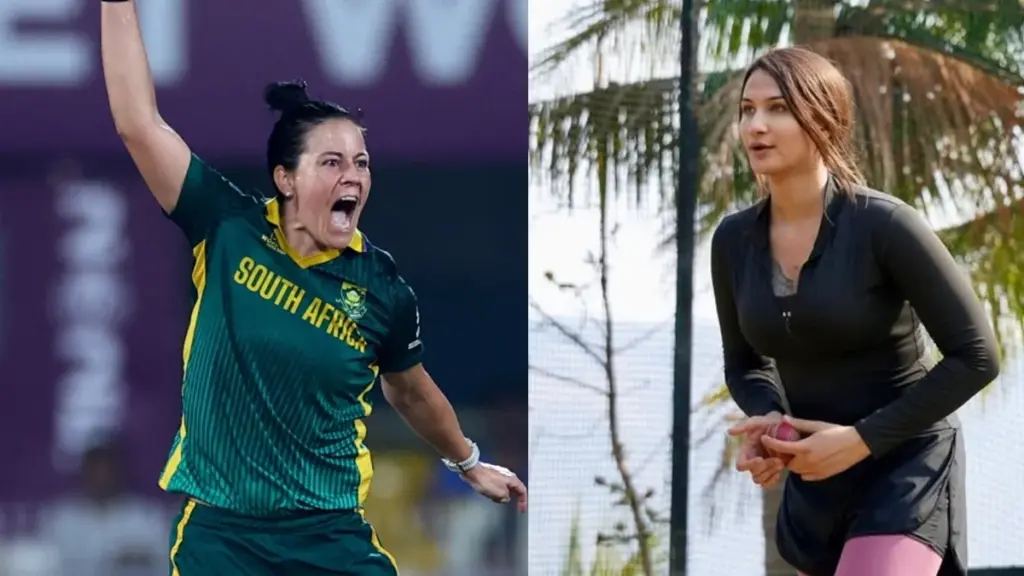
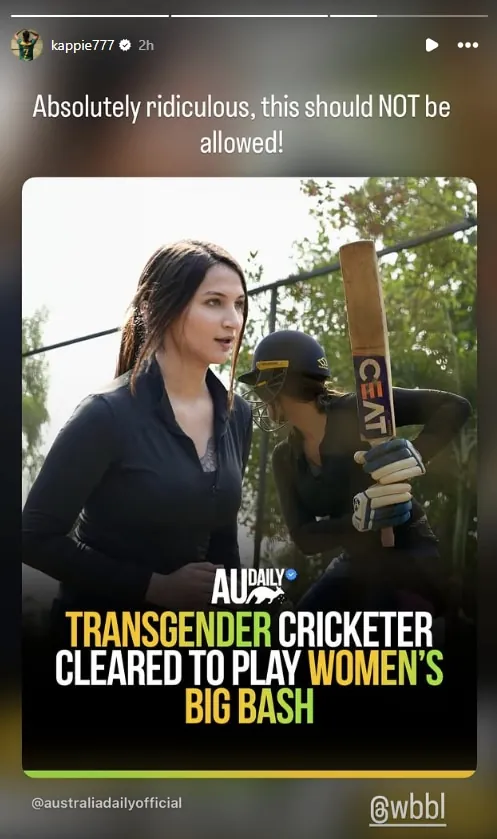
South Africa all-rounder Marizanne Kapp has voiced strong criticism regarding Cricket Australia’s (CA) decision to provide transgender cricketer Anaya Bangar with a pathway to return to competitive women’s cricket. Kapp described the development as “absolutely ridiculous” and stated that it “should not be allowed.” Her comments were shared on Instagram after Australian media reports indicated that CA had cleared Anaya to participate in competitive cricket under its Inclusion of Transgender and Gender Diverse Players in Elite Cricket Policy.
Kapp’s reaction marks her as a prominent women’s cricketer to speak out against the decision. She is a key player for South Africa, having represented the national team for over a decade across various formats and contributing to the growth of women’s cricket both internationally and in franchise competitions.
Anaya Bangar’s Pathway to Cricket
Anaya Bangar, daughter of former India cricketer and coach Sanjay Bangar, underwent gender-affirming surgery in March this year. She has now been granted a pathway towards elite women’s cricket in Australia. Under CA’s decision, Anaya is eligible to play community cricket in any Australian state or territory until March 2027. From March 2027, she could become eligible for elite-level women’s cricket, provided she continues to meet the policy requirements, including a stipulated testosterone threshold.
Cricket Australia’s policy requires a player seeking to participate in the female category of elite cricket to establish that their serum testosterone concentration has been continuously below 10 nmol/L for a period of no less than 12 months. CA informed Anaya via email that, based on submitted medical information, this requirement would be met in March 2027. Her eligibility beyond that point will depend on blood tests confirming her testosterone level remains below 10 nmol/L and her continued adherence to the policy’s requirements.
An expert panel reviewed Anaya’s case before confirming the pathway. This panel included CA’s Head of Integrity Jacqui Partridge, Integrity Partner and Legal representative Emily Yates, Head of Scheduling, Operations and Domestic Cricket Peter Roach, Anti-Doping Medical Officer Dr Peter Harcourt, and Team Doctor Dr Pip Inge.
Anaya stated that the process was thorough, involving a review of her medical and surgical history, hormone and testosterone levels, cricketing background, playing footage, and scientific and athletic performance work conducted with Manchester Metropolitan University’s Institute of Sport. She noted that her most recent blood test in July showed total testosterone at 0.6 nanomoles, which she indicated was within the female reference range reported by the laboratory.
Eligibility Versus Selection
Anaya has clarified that CA’s decision provides an opportunity, not a guarantee of a place in elite cricket. She emphasised, “Eligibility is not selection. Cricket Australia has given me a pathway, which does not mean that I have been given a place in a team. I still have to train, compete, perform and earn that opportunity.”
She further stated, “I don’t expect my history or my identity to earn me a place on a cricket team. I want my cricket to earn me a place on a cricket team.” Anaya acknowledged the high standards of women’s cricket and the ongoing discussions about fairness and competitive integrity in women’s sports. She believes that inclusion and fairness can coexist, which is why she respects the process followed by Cricket Australia.
Anaya revealed that one of her most difficult challenges after transitioning was the possibility that cricket might no longer be an option for her. She spent years seeking a return, and CA’s decision has now given her “a pathway to try.” This pathway could eventually include an opportunity to pursue the Women’s Big Bash League, provided she meets the eligibility requirements in March 2027.
The International Cricket Council’s (ICC) policy, introduced in 2023, does not permit transgender women who have experienced male puberty to compete in international women’s cricket. However, Cricket Australia’s domestic framework has allowed Anaya to participate in community and premier cricket after assessing her case under its own eligibility process. Her clearance for domestic cricket does not automatically grant her eligibility for international cricket or guarantee selection in an elite competition; it currently provides her with a pathway back into women’s cricket in Australia.
Source: timesofindia.indiatimes.com

